Where Is the Terracotta Army Located?
Nestled in the Shaanxi province of China lies one of the world’s most remarkable archaeological discoveries – the Terracotta Army. This ancient wonder has captivated the minds of people worldwide, drawing in millions of visitors each year. But where exactly is the Terracotta Army located, and what makes it such a fascinating historical site?
Unveiling the Enigma of Xi’an
The Terracotta Army is situated near the city of Xi’an, the capital of Shaanxi province in central China. Xi’an holds immense historical significance as one of the oldest cities in the country, boasting a rich tapestry of cultural heritage dating back thousands of years. The city served as the capital for multiple dynasties, including the powerful Qin Dynasty, during which the Terracotta Army was constructed.
Discovered in 1974 by local farmers digging a well, the Terracotta Army is part of the mausoleum complex of Emperor Qin Shi Huang, the first emperor of a unified China. This extraordinary archaeological site is located in the Lintong District, approximately 30 kilometers east of Xi’an, making it easily accessible for visitors eager to delve into China’s ancient past.
Exploring the Mausoleum Complex
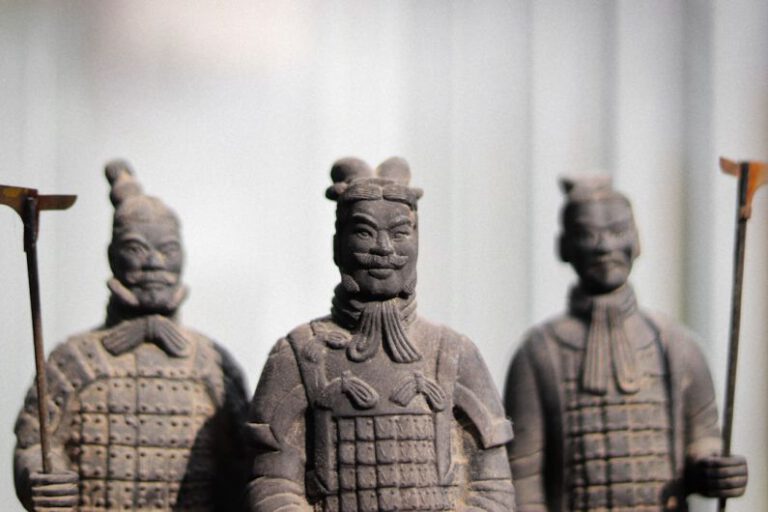
Upon entering the mausoleum complex, visitors are greeted by three massive pits containing thousands of life-sized terracotta statues of soldiers, horses, chariots, and weaponry. The meticulous detail and craftsmanship of these clay figures showcase the artistry and skill of ancient Chinese artisans. Each statue is unique, with distinct facial features, hairstyles, and armor, reflecting the diversity and complexity of the Qin Dynasty’s military forces.
The main pit, Pit 1, is the largest and most impressive of the three pits, housing over 6,000 terracotta soldiers arranged in battle formation. Standing in formation, the soldiers are ready for combat, a silent army frozen in time. Pit 2 features a mix of infantry units, cavalry, and chariots, providing insight into the strategic organization of the ancient Chinese military. Pit 3, the smallest of the pits, contains high-ranking officers and generals, showcasing the hierarchy and command structure of the imperial army.
The Terracotta Army serves as a testament to the power and authority of Emperor Qin Shi Huang, who sought to protect himself in the afterlife with an army that mirrored the grandeur of his earthly rule. The sheer scale and complexity of the mausoleum complex highlight the emperor’s obsession with immortality and his desire to retain his influence even in death.
Unraveling the Mysteries of History
The discovery of the Terracotta Army has shed light on the military tactics, weaponry, and armor of the Qin Dynasty, providing valuable insights into ancient Chinese warfare and imperial culture. The site continues to be a source of fascination for historians, archaeologists, and tourists alike, offering a glimpse into the distant past of one of the world’s oldest civilizations.
Visitors to the Terracotta Army can also explore the nearby Museum of the Terracotta Army, which houses artifacts, weapons, and chariots excavated from the pits. The museum provides a comprehensive overview of the archaeological findings and offers a deeper understanding of the historical significance of the site.
Unveiling the Legacy of Emperor Qin Shi Huang
As visitors wander through the mausoleum complex, they are transported back in time to the era of Emperor Qin Shi Huang, a visionary ruler who left an indelible mark on Chinese history. The Terracotta Army stands as a testament to his ambition, power, and legacy, immortalizing both the emperor and the soldiers who served under him.
In conclusion, the Terracotta Army, located near Xi’an in Shaanxi province, is a remarkable archaeological site that continues to captivate and inspire visitors from around the world. As a symbol of ancient Chinese military prowess and imperial grandeur, this extraordinary discovery offers a unique window into the history and culture of the Qin Dynasty. A visit to the Terracotta Army is a journey through time, a chance to witness firsthand the legacy of Emperor Qin Shi Huang and the awe-inspiring craftsmanship of ancient Chinese artisans.